admin

Midtown Undone

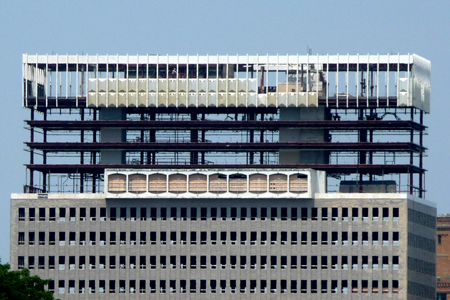
Photographed last week, Midtown Plaza’s piecemeal demolition brings the look of a ship breaking yard to the skyline of Rochester, New York. The image may be bracing to those who remember the project’s promise of urban renewal when it was completed in 1962, to the design of urban planner Victor Gruen. According to the Wikipedia Midtown Undone

Read More

Losing Ground at Chelsea Square

  Architect Charles C. Haight modeled the General Theological Seminary’s bell tower on Magdalen College’s, Oxford. This view of it from Tenth Avenue and 20th Street would be blocked by Beyer Blinder Belle’s proposed addition to the Seminary’s 1836 West Building. The Seminary’s mid-block grounds were designed to complement set-back garden fronts and distinguished row Losing Ground at Chelsea Square

Read More

Saving Chelsea Market

David Burns of STUDIOS Architecture presented his firm’s vision of an expanded Chelsea Market, above, to a meeting of Community Board 4 last night, attended by residents wearing “Save Chelsea Market” buttons. He promptly heard one viewer’s verdict of “ugly building” endorsed by a peal of applause. The view above looks northeast from the West Side Highway. The design tries Saving Chelsea Market

Read More

Where is Michael Bolla’s Lawsuit?

The doors of developer and real estate broker Michael Bolla’s 1835 rowhouse at 436 West 20th Street remain plastered with building notices over a year after a Daily News puff piece proclaimed it “one of the most perfectly restored homes in Manhattan.” On February 10, the Department of Buildings’ website indicated that the project was issued Where is Michael Bolla’s Lawsuit?

Read More

House Rules – Afterword

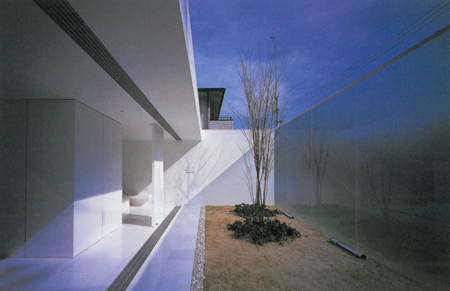
Shinichi Ogawa’s 2002 Abstract House could illustrate any of the ten House Rules. It demonstrates not just their compatibility, but their potential to enhance each other. In exploiting the strategies on which the rules are based, this modest house efficiently summons spatial luxury and an undistracted connection to nature from an ordinary site. Ogawa’s floor House Rules – Afterword

Read More

House Rule 9 – Build for Flexibility

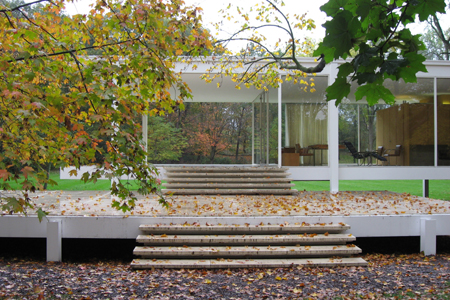
  While not the first great modern house, Mies van der Rohe’s Farnsworth House is without doubt the most influential today.  It embodies two especially pertinent ideas that support flexibility.  Its standardized industrial components suggest a demountable and reusable kit-of-parts architecture which, sixty years since, is the concept behind today’s explosive proliferation of prefabricated modular and recyclable housing solutions.  The Farnsworth House is House Rule 9 – Build for Flexibility

Read More

Chelsea Mansion: The Art of Fiction

       In February, a Daily News article by Jason Sheftell described 436 West 20th Street as “one of the most perfectly restored homes in Manhattan.”  Cracked and displaced bricks and window lintels are now features of its façade, following restoration by its owner, the real estate broker Michael Bolla.  ArchiTakes first reported on the building in a March post, “436 West Chelsea Mansion: The Art of Fiction

Read More

House Rule 8 – Use Trees

  “Light takes the Tree; but who can tell us how?”  Theodore Roethke asked in his 1953 poem, “The Waking.” Trees have been our natural environment since before we came down from them, and they hold a deeply embedded place in the human psyche.  Their generations of leaves are an intuitive metaphor for death and renewal.  In House Rule 8 – Use Trees

Read More

House Rule 6 – Integrate Furniture

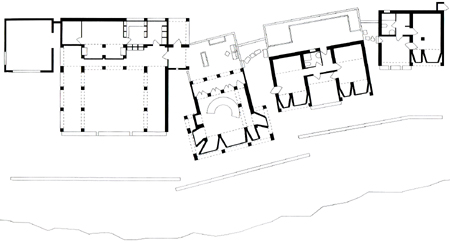
  Architect Jørn Utzon’s home, Can Lis, was completed in 1972.  Composed of individual structures and courtyards, it stands on a cliff overlooking the sea in Majorca, Spain.  A one-room building at its center contains a built-in crescent seat facing the vista through deep openings, with a fireplace on one side.

Read More

House Rule 4 – Pursue a One-Room Ideal

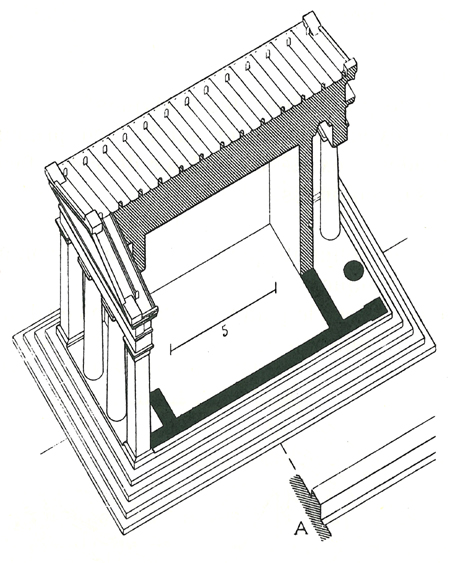
      A cutaway drawing of the Temple of Diana Propylaea at Eleusis illustrates Auguste Choisy’s 1899 Histoire de L’Architecture.  From tepees to temples to iconic mid-century glass houses, one-room buildings derive a primitive power from their simple integration of interior and exterior.

Read More